Sunday, 27 June 2021

What is Adsense


 There are many ways to monetize your website traffic, and most of them are related to advertising third-party products or services to your website visitors. There are many advertising programs that can help you earn money nowadays, but the most popular is Google AdSense.

This advertising program was launched in mid2003 by Google and is currently the most popular advertising program on the Internet. It provides a good opportunity for webmasters and site owners to monetize their traffic - every year, Google pays over $10 billion to its publishers. If you’ve asked yourself, ‘What is AdSense, and how do I make money with AdSense?’ the following article will give you some hints.

The Advantages of Google AdSense

  • A huge number of publishers and advertisers. As of today, over 10 million websites are using it.

  • High level of security, safety and transparency for both advertisers and publishers. This is another good feature of AdSense. Google acts as an intermediary between the two sides and is mindful of the whole process being transparent and clear for everyone. All the necessary metrics can be tracked within your Google Analytics account.

  • Variety of ad formats. In AdSense, advertisers can run text, images, HTML ads, video ads and much more, and in many different sizes. As a publisher, you can experiment with different ad types and figure out which ones drive the most revenue.

Tip: check which sizes are the most used by other publishers and learn from them. For example, in our own study, based on the analysis of over 63,000 advertisers and publishers, we found out that the most popular ad sizes are 728x90 and 300x250:

Display Advertising Stats 2019 by SEMrush

How Does AdSense Work?

The whole process is quite simple. You create an AdSense account, insert a small amount of code into your website pages – and that’s all you need to start. Google will display targeted ads on your page that are either relevant to the content of your website or to users’ previous searches, based on its proprietary algorithms.

What is Google AdSense and How to Make Money With It. Image 1

Your website visitors will start clicking those ads and - the best part - you will be paid for it. Google AdSense works on a cost-per-click and revenue-sharing basis. This means that your main task will be to provide as many clicks to those ads as possible.

Tip: do not try to cheat Google and artificially increase the number of clicks. Do not encourage your website visitors to click ads and - of course - do not click your own ads under any circumstances! Google has a very accurate and complicated system for preventing click fraud. Once it notices some suspicious activity on your website or has any doubts about the quality of your traffic and clicks, it may suspend your account.

How Much Can You Earn With AdSense?

Google charges advertisers per ad click. Publishers get 68% of the click amount (or 51% when it comes to AdSense for search).

The commission you get depends heavily on the competition and CPC in the niche. In practice, the commission per click can range from $0.20 to $15. The majority of niches bring less than $3 per click to publishers. However, there are some niches that can be extremely profitable.

There are two ways to discover the most profitable topics:

1. Estimate an average cost per click in the niche with the CPC Map tool:

What is Google AdSense and How to Make Money With It. Image 2

You can see that the three most expensive niches in the US are Insurance, Online Education and Marketing & Advertising. If you are just about to start a blog and choosing the topics to cover, these numbers will be extremely useful for you.

2. Check the CPC of a particular keyword in the Keyword Magic tool:

SEMrush for AdSense - Keyword Magic tool

This tool is powered by the biggest keyword database in the world (over 14.6 billion keywords as of August 2019). You can just enter a seed keyword (“adsense”, for example) and it will give you tons of related search terms with CPC, search volume and competition level for each of these terms.

Tip: the amount you earn doesn’t solely depend on the cost per click value in your niche. It also depends on how ads match your audience interests, where the ads are located on the page, etc. So pay attention to the content of your website, its look and feel, and test different placements within a page to find the most efficient option.

Traffic Is The King

Finally, and most importantly, your earnings also depend on the amount of targeted traffic to your website. You can choose the most expensive niche and pick the best placements for your ads, but it doesn’t make sense if nobody comes to your website or blog. Keep in mind that only a very small number of your visitors will click the ads (there are no official statistics from Google, but usually webmasters report that 1% to 2% is quite a good CTR). Most probably, the clicks will bring you less than $1 per click. Now you can calculate yourself how much traffic you need to earn the amount you want. Therefore, if you want to make money with AdSense you should have large volumes of traffic. This will require a lot of work and a lot of unique and quality content.

This means that it is always reasonable to create a website on a topic you know a great deal about. It will be much easier for you to generate a lot of quality content and this work will be pleasurable. Do not expect to make $1,000 per month with a 10-page website. It is recommended to create at least 20-30 pages of content before you start working with AdSense.

Summary

Briefly summarizing, you can make pretty good money with Google AdSense, but it is not a program where you can get rich quickly. There are some common sense rules to follow that will help you lay the groundwork for high and stable earnings:

  • Love the topic you are writing about and know a lot about it.

  • As well as producing unique and relevant content, do it on a regular basis to make Google aware that your website is being updated constantly with fresh information.

  • Do not try to cheat Google with any kind of “artificial” clicks.

  • Do some research to find the most profitable niches in terms of CPC and search demand. Build your content plan according to these insights.

This will help you to get a lot of traffic and monetize it with AdSense.

How to Increase Blog traffic: 20 Easy Ways Step to Stardom


Getting more people to read your blog is both an art and science. Employ these 20 tips on how to get your blog noticed.

Every business owner who's ever hosted a blog has experienced the frustration of trying to gain readership. Though we’d all like it if readers just magically came to us, the reality is, it takes some work to build an audience.

It's easy to get frustrated and just give up on blogging, but once you experience the benefits, you'll understand that your blog can have a tremendous impact on your business by attracting traffic to your site, helping you build a social media audience and making an impression on prospects and clients alike.

Following are 20 proven strategies that can help you boost readership and increase traffic to your blog.

1. Write more.

Studies show that the more often you update your blog, the more traffic it will receive. Google gives higher priority to websites with fresh content, so if you want to get more attention from the search engines, update your blog at least twice a week.

2. Promote with social media.

Share each new blog post across your social media networks, including Twitter, LinkedIn, Facebook, Google+ and Pinterest. If you spend time cultivating your networks and share great content, social media sites can become some of your top traffic sources.

3. Write better titles.

The titles for your blog posts are almost more important than the content itself. That's because titles help potential readers decide whether they should click and read more. Pay attention to the article titles you see on magazine covers. They entice readers with promises and solutions. When you do the same, your readership will increase.

4. Know your niche.

While you may be interested in sea life, exotic travel destinations, Little League baseball and weight loss, you'll confuse your audience if your content doesn’t follow a clear theme. Decide who your target audience is, what they want to read and what specific messages you want to convey.

5. Include photos.

Studies have shown that photos in blog posts boost readership. Not only does a photo make the post more visually appealing, but you can also include keywords in the Alt Image tag on the photo, boosting search engine optimization (SEO) for your site. Keep in mind that you can’t just pull any photo from Google because you risk violating copyright laws. Instead, locate royalty-free images from a site like Clipart.com.

6. Incorporate keywords.

Speaking of SEO, keywords are at the heart of SEO. One of the easiest ways to generate more traffic to your website is to ensure that every page on your site has a keyword strategy. So for each blog post you write, choose one key phrase that you believe readers would use to find that post. Next, incorporate that phrase into the title of the post, the headline on the page, within the content on the page at least two times, in a featured image on the page and also as part of the page link. Keyword concentration helps Google understand what that page is about, which can ultimately lead to more traffic from the search engines.

7. Incorporate links.

When you mention another company’s product or service in a blog post, include a link to that company’s page. Not only does Google like to see outbound links on your site, the company you mention may also notice your post and link back to you. Plus, readers appreciate it when you provide resources to make it easier for them to find the things they're looking for.

8. Add social sharing buttons.

At the top and bottom of your blog posts, make sure you include social sharing buttons for Twitter, LinkedIn and the other major social networks. Make it easy for readers to spread the word.

9. Retweet past content.

We aren’t all looking at Twitter at the same time, so when you share a new blog post link, the majority of your fan base won’t see it the first time. Repeat your tweets, and don’t be afraid to share past content. Readers don’t care when it was written as long as it’s still relevant.

10. Invite guest contributors.

When others write for your blog, you add more content that you didn’t have to write yourself. As a bonus, those contributors will also share with their networks and may ask you to write for them, opening up new readership avenues for you.

11. Add video.

Google owns YouTube, which is one of the many reasons that videos can drive more traffic to your site. Supplement the written content on your blog with short videos that are informative and entertaining.

12. Invest in promotion.

If you believe your audience is spending time on Facebook, occasionally invest in sponsored posts. For as little as $10, you can “Boost” a post and increase its reach significantly.

13. Conduct give-away events.

Create fun theme days such as “Free Book Fridays” where your readers can win a prize by submitting a comment or sharing your link via social media. You can provide prizes yourself or invite companies to donate or sponsor these promotions.

14. Write guest posts.

Locate other blogs that reach your target audience, and offer to contribute guest blog posts. If the site has a substantial audience, you can bet that readers will in turn want to engage with more of your content.

15. Cross-promote to your mailing list.

Instead of writing all new content for your electronic newsletter, share the first paragraph from several recent blog posts and include a link to continue reading on the site. Not everyone is taking the time to read your blog each week, so this will help get your subscribers invested in your blog.

In addition to the tips above, the following smart strategies will also help increase readership:

16. Make your content easy to read by using plenty of subheads, bullets and numbered lists.

17. Promote your blog in your email signature and your bio in any online profiles.

18. Make it easy for blog visitors to subscribe to your RSS feed.

19. Invite readers to leave a comment, then respond and let them know you’re engaged.

20. Finally, have fun with your blog. If it feels like drudgery, your readers will notice. But if you enjoy producing the content, that will come across and have a tremendous impact on your success

Tuesday, 15 June 2021

What is a Blog ? A guide for beginners


 Plenty of people who have heard the term “blogging” fail to understand what a “blog” is or how creating or reading one can impact or improve their lives. Whether you have absolutely no idea what these terms mean or you know the basics but want to learn more, this guide provides you with a thorough breakdown of the topic.

The following sections also provide details about popular blogging sites and how to use one or more blogs to generate funds for personal and business goals.

So exactly what is a blog?

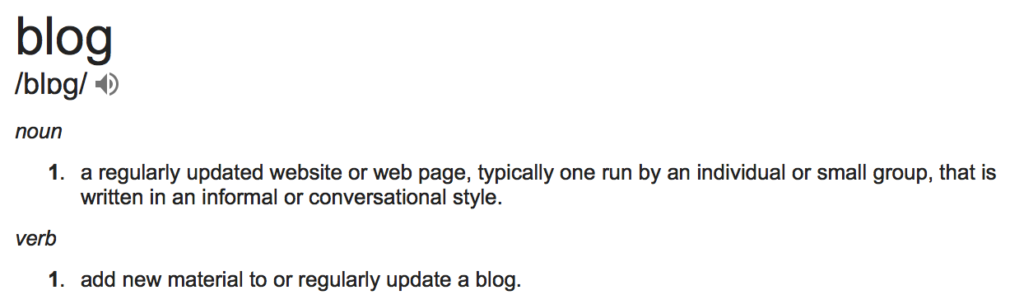
A blog is an online diary or journal located on a website. The content of a blog typically includes text, pictures, videos, animated GIFs and even scans from old physical offline diaries or journals and other hard copy documents. Since a blog can exist merely for personal use, sharing information with an exclusive group or to engage the public, a blog owner can set their blog for private or public access.

When a blog is made publicly accessible, anyone can typically find the blog through links available on the blog owner’s individual or business website, their social media profiles, emails and e-newsletters and online keyword search engines. Many blog owners also set up blogs on websites devoted to the creation, storage and sharing of blogs, such as Blogger, LiveJournal, Tumblr and WordPress.

Blog content can appear as posts on one continuous streaming page or posts on individual pages reachable through one or more pages set up in a list-style format as post title links, excerpts and related tags. All posts or links to posts are typically displayed to readers in reverse chronological order with the most recent content appearing first.

Have a look at some great blog examples here.

Opt In Image
Start A Money Making Blog TODAY - FREE Email Course
I'll Show you How to Start a Blog in Just 7 Days

In this free email course, I will show you how to create a blog easily.

- Learn to set up your blog in minutes
- Make your first dollar with your blog
- Attract your first readers

Sign Up - Start your journey


History Of The Blog

Blogs started out as a natural extension of the increased use of computers and the creation of the earliest forms of the Internet as government military, scientific and academic networks. Before the World Wide Web, communities of people interacted on these networks. Individuals created content for themselves or others and stored that content on computers that were connected to the networks. Before blogs became popular, these communities often communicated and shared frequently-updated content through community message boards. The term “newsgroups” became coined to describe many of these discussion and information-sharing areas.

The earliest true blogs started appearing around 1994 or 1995 as open access diaries where individuals shared updates about their lives, such as personal thoughts and facts about events related to their families, academic studies, career, travels and other topics. Early online diary writers include Claudio Pinhanez, Justin Hall and Carolyn Burke. The media and public really started noticing the content and documenting its formation around approximately 1996 and 1997.

The exact date and year of the first use of the term “blog” is still debated by scholars. Most believe that it happened in 1999 as the natural truncation of a particular description of this type of content, “web log” or “weblog,” into the shortened form. Some debate exists on pronunciation. Obviously, the term describes a diary or log located and accessible on the World Wide Web. As time passed, some people thought that “weblog” should be pronounced “we blog” to refer to individuals performing the action of blogging.

Blogs vs Websites – What is the difference?

The primary difference between a blog and a website is that a blog is a specific type of content displayed on web pages on a website. Confusion often occurs because individuals and representatives of businesses often use the two terms interchangeably. For example, someone might say that they visited a company’s blog when in fact the blog was merely one part of the company’s website. Confusion also occurs because platforms that are devoted entirely to blogging create the impression that a person’s or company’s blog on one of these platforms is also their primary website.

To help sort it all out, keep the following in mind: In most cases, non-blogging websites are updated with new content less frequently then associated blog pages and blog-devoted websites. Blogs typically receive weekly, daily or even less than hourly updates. Non-blog websites, such as individual personal interest and biography or business sites, typically only update their news and blog content at that frequency and then add new pages or update some content as needed. Blogs also promote discussion. They have comment sections designed to create online conversations about blog content and blog owners in a similar fashion as comment sections provided to readers by news media platforms and other publishers under online articles.

You can use my tutorial to learn how to build a WordPress website.

Blog posts Vs Pages – What is the difference?

Simply put, the blog content that you pull up in your browser appears on a web page. The term “page” describes the document and the location. It is important to note that the term “blog” is also frequently used to describe a collection of web pages that specifically share blog content, especially on blog-focused websites. This usage is similar to how people describe a collection of pages in a diary, journal or log collectively as the object. As previously mentioned, blog content is updated frequently. Many websites have non-blog pages that contain content that rarely changes, such as a company’s history page or contact page. Some web pages have not been updated beyond a few tiny refreshed and new content changes in years.

Want to start your own blog?
We recommend using Bluehost.com

Get web hosting + Free Website Builder + A FREE DOMAIN name for just $2.95 per month.

Setting up your blog with Bluehost is so simple. With their one click WordPress installation and quick set up, you can be live and blogging in just 30 mins.

Check out my How To Start A Blog guide or head over to Bluehost to get started.

Popularity Of Blogs & Blogging

A lot of people wonder why blogs and blogging have become so popular. Blogs provide a social outlet. Many people, by nature, are social animals. They actively seek out other people offline or online for interaction and sharing of knowledge and perspectives. Even many people who are anti-social in face-to-face, offline settings enjoy interacting online through social networks using their true identities or anonymous personas. Since a blog is a social tool, creating or reading blogs provides them with a better alternative method for interacting with others that did not previously exist.

Additionally, social and anti-social people use blogs to build new friendships and other types of relationships and gain a better understanding of the lives of people who they might not likely interact with on a daily basis. For example, blogs offer them opportunities to interact with people who are from others cultures and/or live in other geographic regions, people who work in different career fields and people who have taken up previously geographically-limited and rare types of hobbies. In these cases, blogs offer content that people could only find in the past through offline newspapers, magazines, television programs, films, documentaries and special festivities sponsored by communities, businesses art organizations, local, state and federal government administrations and academic institutions.

What kind of people blog?

Almost no limitations exist in regards to the types of people who create blogs. Blog creators, also known as “bloggers,” come from all walks of life and backgrounds from around the world. As long as a person has access to online tools that help them to create web page content, they can make a blog and promote it to attract readers. The most common bloggers include individuals who want to simply share personal information about themselves and/or their interests and hobbies with the world.

Some people use this web content tool to bring greater awareness to topics they feel are critically important to the betterment of others like topics related to political news, charitable organizations, safety issues, pet care and health conditions. Businesses typically use blogs to improve the lives of their customers in general, teach customers how to safely use products/services and bring attention to their expertise in a particular industry or their products/services.

Why do people bother blogging?

People blog for a wide range of reasons beyond those already mentioned. Many people simply dislike traditional offline diary writing and need an outlet for their thoughts and feelings beyond that format, face-to-face interactions, phone calls or online chat. Some people love that they can share their innermost thoughts and information with someone else half way around the world. Sometimes this outlet is desired because they have no offline friends or support system and use blogging to help them deal with stressful life events like acute and chronic health conditions or grief after the death of loved ones.

Since many other forms of content on various websites do not require frequent updates, a lot of people, especially business owners, use their blogs as part of their search engine optimization toolkit to maintain or improve their search engine result ranking and drive more traffic to their websites. Search engine algorithms rank fresh, valuable content higher than older content and when a website receives more traffic that site owner has a higher chance of increasing their revenue.

How Do Bloggers Make Money From Their Blogs?

Beyond improving website traffic by updating content regularly, individuals and businesses make money off of their blogs by building trust with members of their target market. They offer content that their target audience finds interesting and useful and that also establishes them as knowledgeable experts. Consumers often buy new products and services from individuals and businesses who they trust.

They are also more likely to be repeat, loyal customers to anyone who engages them and provides them with “free” valuable content. Consumers who trust an individual or business and start to rely upon a specific website for information are then more likely to recognize a brand, buy products or services and even provide word of mouth referrals about their positive experiences to members of their social networks.

Those referrals then often lead to new customers and future sales. Of course, by maintaining contact with members of their target market through their blogs, individuals and business owners who sell products and services are able to bring attention to new products and services and spread news about upcoming sales and deals to people who might not otherwise hear about these details through traditional advertising methods.

Some blog owners earn money every time someone merely clicks static or dynamic ads or other embedded links on their blog pages that go to affiliate partner websites or earn a commission when someone buys a product or service on a partner website after using their link.

Lastly, many blog owners make money by selling their blogs. Blog sales typically happen after a niche topic blog website starts receiving incredibly high traffic and becomes attractive to an investor as a potential high volume money-making tool. Some people buy a blog just so that they can merge it with their existing blog or shut down the purchased blog site entirely because the competition was driving traffic away from their own blog and/or other websites.

As you can see, a blog provides an individual or business the means to share all kinds of information and reap all sorts of rewards from their efforts. Blogs can be therapeutic alone or do double duty by both serving as a social outlet and money generator. If you do not currently have a blog, review some of the popular blogging sites listed in this guide or check out the blogs of your favorite celebrities, businesses or hobby associations to give you ideas about what a successful blog looks like and the elements that go into it. If you do have an online diary but you have not promoted or monetized it in the ways outlined in this guide, review these methods and give real consideration to the idea of turning your blog into a secondary income stream.